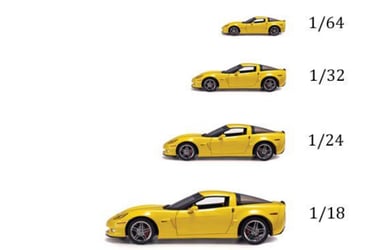
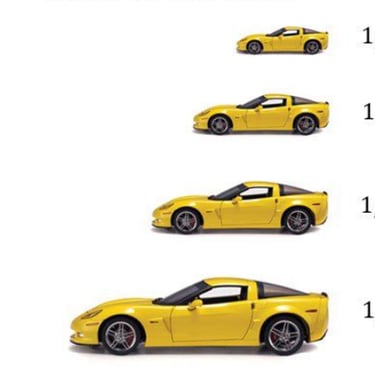
Scale Sizes
Diecast scale size can be confusing if you’re new to collecting. Numbers like 1:64, 1:43, 1:24, and 1:18 all describe how big a model is compared to the real car. Choosing the right scale matters for display, storage, and how you build your collection over time. This guide explains the most common diecast scales, what they’re best for, and how to pick the sizes that suit your space and budget.
What Does Diecast Scale Size Mean?
A scale like 1:64 or 1:24 is a ratio that shows how much smaller the model is than the real car.
1:64 scale means the model is 64 times smaller than the real vehicle
1:24 scale means the model is 24 times smaller than the real vehicle
In simple terms: the smaller the second number, the bigger the model. So 1:18 is larger than 1:24, which is larger than 1:43, and so on. Once you understand this, it’s easier to compare sizes and decide what fits your shelves.
1:64 Scale – Small, Affordable & Easy to Collect
1:64 scale is one of the most popular diecast sizes.
Typical size:
Around 7–8 cm (about 2.75–3 inches) long for most cars.
Why collectors like 1:64:
Affordable: Usually the cheapest scale, easy to buy in multiples.
Space‑saving: You can fit a lot of models in a small cabinet, drawer, or display case.
Huge variety: Many brands, themes, and models to choose from.
Best for:
Collectors with limited space, people who enjoy variety, and those building large collections, themed shelves, or compact dioramas (streets, garages, parking lots).
1:43 Scale – Great Balance of Detail and Size
1:43 scale sits between small and medium diecast sizes.
Typical size:
Around 9–11 cm (3.5–4.5 inches) long.
Why collectors like 1:43:
More detail than 1:64: Better proportions, finer trim, and often nicer interiors.
Still compact: Easier to display than large scales while showing more detail.
Popular worldwide: Many classic and European releases come in 1:43.
Best for:
Collectors who want more display presence and detail than 1:64, but don’t have the space for 1:24 or 1:18. Good for classic car and race car collections.
1:24 Scale – Big Presence, Good Detail
1:24 scale is a very popular “display” size for diecast.
Typical size:
Around 18–20 cm (7–8 inches) long.
Why collectors like 1:24:
Strong shelf presence: Large enough to stand out in cabinets and on shelves.
Good detail: Often includes opening doors, hoods, and visible engine or interior detail.
Great for dioramas: Easier to build garages, streets, and workshop scenes around this size.
Best for:
Collectors who want their favorite models to really stand out—muscle cars, movie cars, race cars, and special pieces that deserve more attention.
1:18 Scale – Large, Detailed & Premium
1:18 scale models are among the largest and most detailed diecast cars many collectors own.
Typical size:
Around 25–30 cm (10–12 inches) long.
Why collectors like 1:18:
High detail: Often detailed interiors, engines, brakes, and realistic textures.
Display pieces: One 1:18 model can be a centerpiece on a shelf or in a cabinet.
Premium feel: Many 1:18 models are higher‑end, aimed at serious collectors.
Best for:
Collectors with more space who want fewer but higher‑impact models. Ideal for hero cars—favorite classics, movie cars, race legends, or dream cars.
Other Scales You Might See
You might also find other diecast scales, such as:
1:32 scale: Between 1:43 and 1:24, popular for farm and construction models.
1:12 or larger: Very big and highly detailed, but require a lot of display space.
While these are less common than 1:64, 1:43, 1:24, and 1:18, they can still be fun if they fit your collecting style.
How to Choose the Best Scale for Your Collection
When choosing diecast scale size, think about:
Space: Smaller scales (1:64, 1:43) fit more cars in less space; larger scales (1:24, 1:18) need deeper shelves and taller cabinets.
Budget: 1:64 is usually most affordable; 1:18 is often the most expensive.
Detail vs quantity: Decide whether you want lots of models (1:64) or fewer, more detailed display pieces (1:24, 1:18).
Theme: Some themes (like certain race series or brands) are stronger in particular scales.
Many collectors pick one main scale and stick with it for most of their collection. Others choose two scales—for example, 1:64 for variety, and 1:24 or 1:18 for their favorite “hero” cars.
Building a Diecast Collection with Scale in Mind
Planning your scale size from the start will help your diecast collection look organized instead of random. Matching scales on each shelf or in each display case creates a cleaner look and makes it easier to build dioramas and backgrounds. You don’t have to choose only one size, but keeping related models in the same scale will make your displays more visually consistent.
Whether you prefer 1:64, 1:43, 1:24, 1:18, or a mix, understanding scale helps you buy smarter, use your space better, and get more satisfaction from every car you add to your collection. decals. Smaller 1:64 cars can be trickier for fine details but are great for quick customs and large collections. Larger scales are better for highly detailed builds, wiring, and scratch‑built parts. Whatever scale you choose, understanding the numbers helps you pick the right size cars for your collection, display space, and custom projects.